Introduction
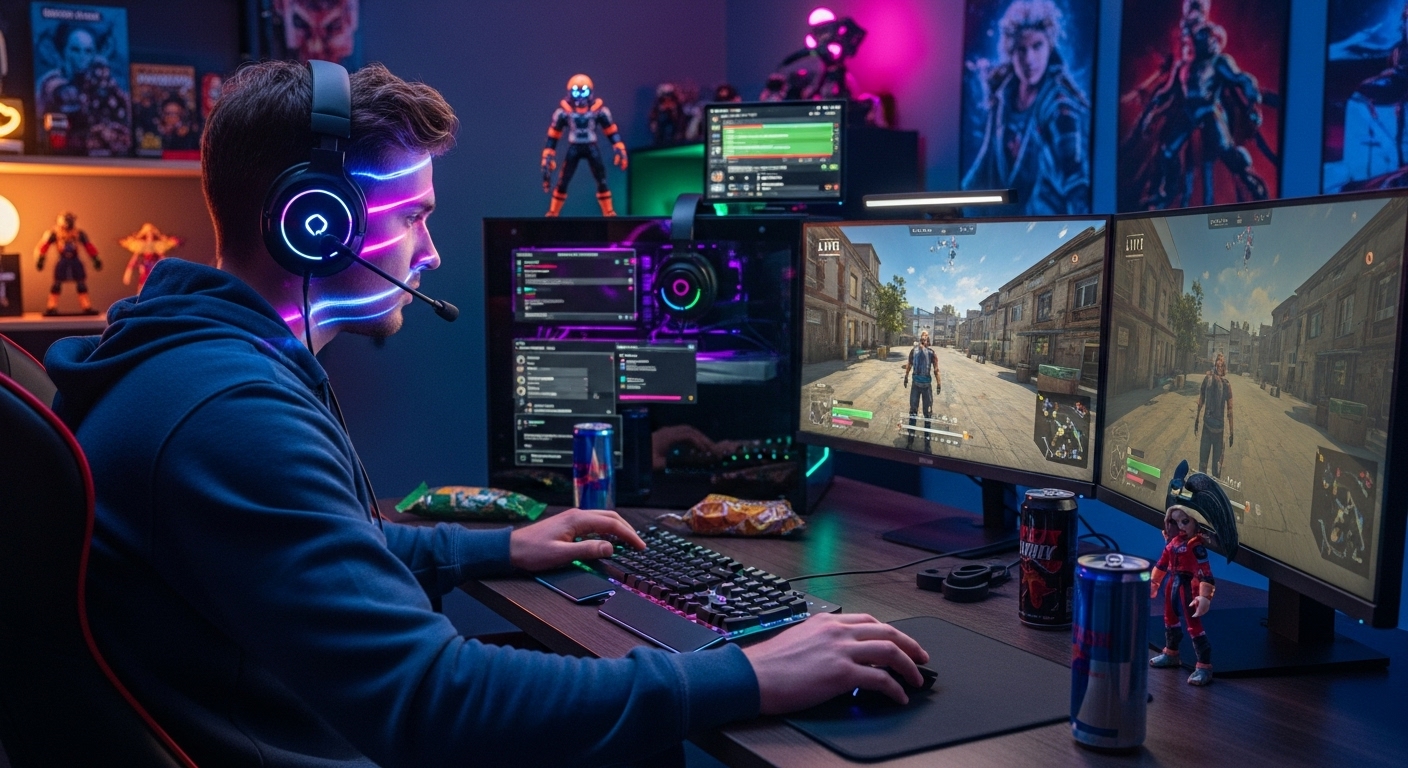
Gaming has come a long way since the days of Pong and simple 8-bit graphics. Today, it’s an all-encompassing entertainment medium, pushing the boundaries of technology, creativity, and social connection. Whether you’re a casual player or a competitive eSports enthusiast, gaming offers a diverse range of experiences that continue to captivate people of all ages and backgrounds. The gaming world has evolved from solitary, single-player experiences to vast multiplayer worlds and interactive adventures that feel almost as real as the world we live in. In this blog post, we’ll explore the fascinating evolution of gaming, its cultural impact, and the future possibilities that await in the ever-growing gaming universe.
The Humble Beginnings of Gaming
Gaming has its roots in the mid-20th century, when computers were first becoming accessible to the public. The earliest video games were extremely simple by today’s standards, consisting of basic graphics and gameplay mechanics. The first recognized video game, Tennis for Two, was created in 1958 by physicist William Higinbotham as a demonstration on an oscilloscope. While primitive, it laid the groundwork for the interactivity that would later define gaming.
In 1972, Atari released Pong, one of the first commercially successful video games, bringing arcade gaming into the mainstream. Pong was a simple simulation of table tennis, where players controlled paddles to hit a bouncing ball back and forth. Its success in arcades sparked an entire industry, and soon, arcade machines began to populate malls, movie theaters, and other public spaces. These early arcade games such as Space Invaders, Pac-Man, and Donkey Kong were relatively simple, but they captured the imagination of the public and defined a new form of entertainment.
The Golden Age of Console Gaming
The 1980s marked the beginning of the console gaming era, with companies like Nintendo and Sega bringing gaming into people’s homes. The launch of the Nintendo Entertainment System (NES) in 1985 was a major turning point for the industry. It featured titles like Super Mario Bros., The Legend of Zelda, and Metroid, which not only introduced groundbreaking gameplay but also set the foundation for the genres we know today.
The NES was a massive success, and other companies quickly followed suit, including Sega with its Genesis system, released in 1989. This era of console gaming introduced some of the most iconic characters and franchises in gaming history, such as Sonic the Hedgehog, Street Fighter, and Mortal Kombat. These games pushed the limits of graphics and sound for the time and provided a more immersive gaming experience compared to what players had experienced in arcades.
The 1990s continued the growth of console gaming with the advent of 3D graphics. Sony’s PlayStation, released in 1994, revolutionized gaming with its powerful hardware and ability to render detailed 3D environments. This ushered in a new era of more complex, story-driven games. Titles like Final Fantasy VII, Metal Gear Solid, and Gran Turismo became instant classics and demonstrated the full potential of what gaming could achieve in terms of narrative, visuals, and interactivity.
The Rise of PC Gaming and Online Communities
While consoles were shaping the gaming landscape, personal computers were becoming a major force in the gaming world as well. In the 1990s, PC gaming emerged as a significant platform, offering more power and flexibility than consoles. The PC allowed for more complex games and introduced genres like first-person shooters (FPS) and real-time strategy (RTS). Games like Doom, Warcraft, and Command & Conquer redefined what it meant to be a gamer.
The early days of PC gaming also saw the rise of online multiplayer games. As the internet became more widespread, players could connect to each other via dial-up modems and battle in virtual worlds. Quake, StarCraft, and Counter-Strike brought online multiplayer gaming into the mainstream, creating a new social aspect to gaming. Players were no longer confined to playing alone or with friends in the same room. They could now face off against opponents from all over the world in real-time, creating a competitive and collaborative environment that would define the future of gaming.
The Impact of Online Gaming and eSports
As internet speeds improved and broadband became widely available, online gaming exploded in popularity during the late 2000s and early 2010s. Titles like World of Warcraft, League of Legends, and Call of Duty allowed players to engage in massive multiplayer experiences, creating entire online communities of gamers. These games also laid the foundation for eSports, where competitive gaming became a spectator sport.
eSports, or electronic sports, has grown into a multi-billion-dollar industry, with professional players, teams, and tournaments attracting millions of viewers. Games like Dota 2, Overwatch, and Fortnite have transformed gaming into a legitimate career path for many players, with sponsorships, prize money, and streaming revenue supporting top-tier competitors. Competitive gaming has also created a sense of camaraderie, as players come together to root for their favorite teams and players, much like traditional sports.
The rise of platforms like Twitch and YouTube has also played a huge role in the growth of gaming communities. These platforms allow players to stream their gameplay live, interact with their audience, and even make a living from their passion. Content creators can now build massive followings, influence gaming culture, and connect with fans in ways that weren’t possible in the past.
Mobile Gaming: A Revolution in Accessibility
The advent of smartphones in the late 2000s marked another major shift in the gaming industry. Mobile gaming has since become one of the most significant sectors of the gaming market, making gaming more accessible than ever before. Games like Angry Birds, Clash of Clans, and Candy Crush Saga brought gaming to a massive global audience, offering casual players a chance to enjoy short bursts of entertainment on the go.
Mobile gaming’s success can be attributed to the ubiquity of smartphones and the free-to-play model. These games often come with optional in-app purchases, allowing players to enjoy the game without having to pay upfront. The simplicity of mobile games, combined with their accessibility, has introduced millions of people to gaming who may not have otherwise considered themselves gamers.
Pokémon Go, released in 2016, further pushed the boundaries of mobile gaming by incorporating augmented reality (AR) technology. Players were able to catch virtual Pokémon in real-world locations, creating a unique blend of gaming and physical activity. This development marked the first true integration of AR into mainstream gaming, and it has since opened the door for more AR-based games and experiences.
Virtual Reality and the Future of Gaming
As gaming continues to evolve, the next frontier is virtual reality (VR). VR technology immerses players in fully interactive digital worlds, allowing them to experience games in a way that was previously unimaginable. VR gaming has already made strides with platforms like Oculus Rift, HTC Vive, and PlayStation VR. Games like Half-Life: Alyx and Beat Saber have demonstrated the potential of VR, offering experiences that let players physically engage with the game world through motion controllers and headsets.
The appeal of VR gaming lies in its ability to transport players into a different reality, offering a level of immersion that traditional gaming cannot match. Players can explore alien worlds, battle monsters, or solve puzzles—all while feeling like they are truly inside the game. As VR technology improves, the potential for more realistic and immersive gaming experiences will only grow, making VR the next big step in the evolution of gaming.
Artificial intelligence (AI) is also expected to play a major role in the future of gaming. AI can be used to create smarter non-player characters (NPCs), adaptive storylines, and even dynamic game worlds that change based on player decisions. Games could become more personalized, with AI-driven narratives that respond to the choices and actions of individual players. The result would be a more dynamic and unpredictable gaming experience that feels truly unique to each player.
Conclusion
Gaming has come a long way since its humble beginnings as simple, pixelated screens in arcades. Today, it’s an ever-evolving industry that has become ingrained in the fabric of our culture. From the rise of online multiplayer gaming to the explosion of mobile gaming, and the future promise of VR and AI, gaming continues to push the boundaries of what’s possible in entertainment. Whether you’re playing on a console, PC, or mobile device, gaming has become an integral part of modern life, offering something for everyone—whether it’s competition, collaboration, or pure escapism. The future of gaming is bright, with endless possibilities for innovation and expansion. What’s next? Only time will tell, but one thing is certain—gaming will continue to evolve and captivate us for years to come.