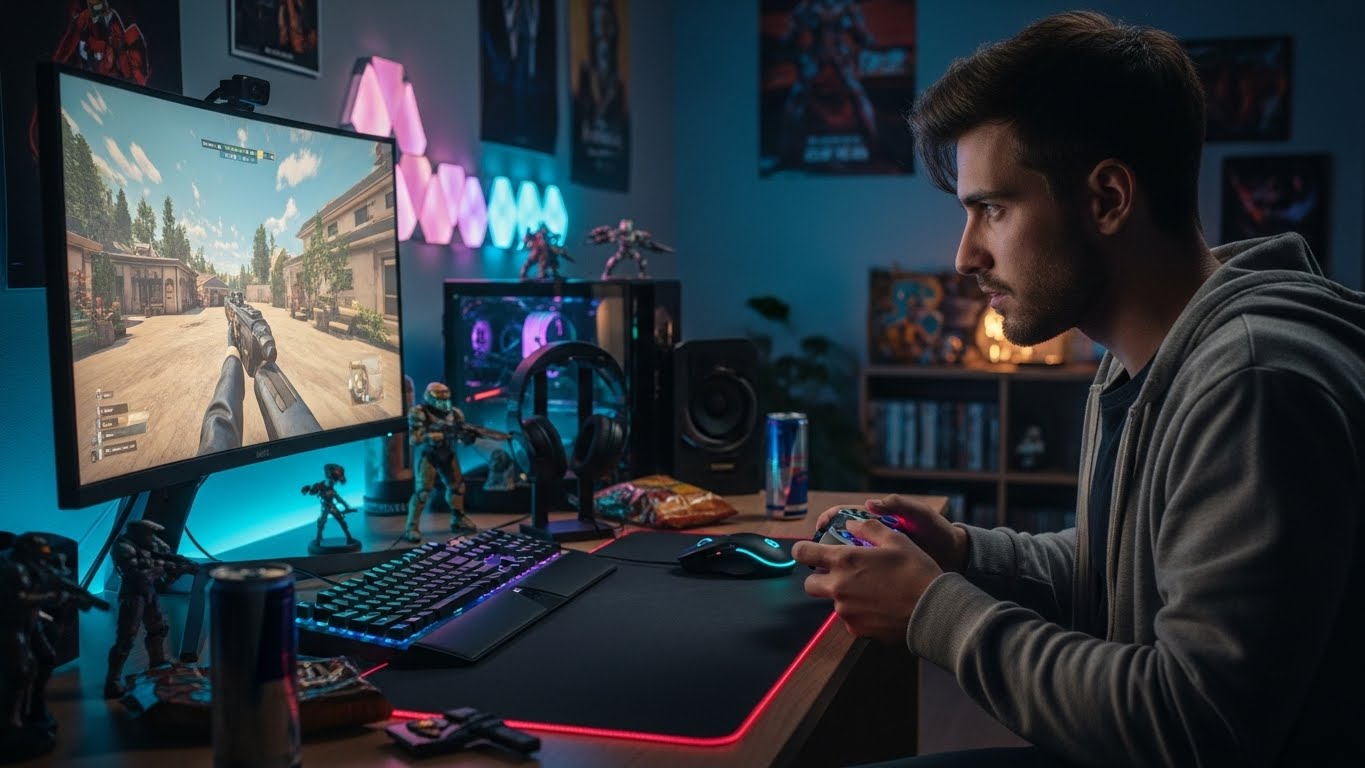
Gaming has evolved from simple pixelated screens into a cultural, social, and technological powerhouse. Once considered a pastime for children or hobbyists, gaming has become a global phenomenon influencing entertainment, education, and professional sports. It blends storytelling, strategy, and immersive experiences, captivating millions worldwide. This blog explores the history of gaming, its technological innovations, social impact, cognitive benefits, economic influence, and the exciting future of interactive entertainment.
The Origins of Gaming: From Arcades to Consoles
The history of gaming dates back to the 1970s and 1980s, when arcade games like Pong, Space Invaders, and Pac-Man dominated entertainment venues. These games were simple in mechanics but addictive, sparking a wave of enthusiasm among players who competed for high scores. Arcades became social hubs where players could meet, share tips, and develop a competitive spirit.
The rise of home consoles in the 1980s, such as the Nintendo Entertainment System and Sega Genesis, transformed gaming. Players could now immerse themselves in complex narratives and interactive worlds from the comfort of their homes. Titles like Super Mario Bros., Sonic the Hedgehog, and The Legend of Zelda introduced richer gameplay, compelling storylines, and iconic characters that shaped the cultural identity of gaming.
The 1990s saw the emergence of PC gaming and multiplayer online experiences. Games like Doom, Quake, and Warcraft allowed players to connect over local networks, marking the beginning of online competitive gaming. This era laid the foundation for modern gaming communities, connecting players beyond physical boundaries.
Technological Innovations Driving Gaming
Modern gaming is a product of rapid technological advancements. High-performance graphics processing units (GPUs) render detailed environments, lifelike characters, and realistic physics. Game engines simulate complex systems, allowing players to interact dynamically with virtual worlds.
Online connectivity and cloud computing have revolutionized multiplayer gaming. Players can now compete, cooperate, and communicate in real time across continents. Streaming technology has further expanded the gaming ecosystem, enabling players to broadcast gameplay and engage with global audiences.
Virtual reality (VR) and augmented reality (AR) are redefining immersion. VR headsets transport players into fully interactive environments, while AR overlays digital elements onto the real world. Motion-sensing controllers and haptic feedback devices enhance physical interaction, making gameplay more engaging and intuitive. Gaming technology is no longer just entertainment—it is shaping education, healthcare, and training simulations.
Gaming as a Social Platform
Contrary to stereotypes, gaming fosters social interaction and collaboration. Multiplayer games encourage teamwork, communication, and strategic planning. Communities form around guilds, clans, and online forums, creating social networks that transcend geography.
Esports has professionalized competitive gaming, with tournaments attracting millions of viewers worldwide. Platforms for live streaming allow fans to engage with their favorite players, turning gamers into global influencers. Gaming events and conventions serve as cultural gatherings, blending competition, creativity, and entertainment.
Gaming also promotes inclusivity. Accessibility features ensure players with disabilities can participate, and diverse character representation allows players from all backgrounds to connect with narratives and experiences. Social interaction in gaming contributes to community building, cultural exchange, and a sense of belonging.
Cognitive and Educational Benefits of Gaming
Gaming is more than entertainment; it offers cognitive and educational benefits. Strategy and puzzle games enhance problem-solving, planning, and critical thinking skills. Action games improve hand-eye coordination, reaction time, and spatial awareness. Certain games are designed to boost memory, attention, and multitasking capabilities.
Educational games combine fun and learning. Language-learning platforms, historical simulations, and science-based games leverage gamification techniques to make complex concepts engaging. Interactive storytelling enhances comprehension and retention, demonstrating that gaming can be an effective educational tool.
The Economic Power of Gaming
The gaming industry is a multi-billion-dollar global enterprise. Developers invest heavily in research, design, programming, and marketing to create immersive experiences. Game launches are major cultural and financial events, often generating substantial revenue on release day.
Monetization strategies include microtransactions, downloadable content (DLC), subscription services, and merchandising. Free-to-play games earn revenue through in-game purchases, while subscription models provide continuous access to extensive game libraries. The economic impact extends beyond game sales, influencing hardware, streaming platforms, esports, and media production.
Professional gaming, esports, and content creation provide career opportunities for players, streamers, developers, and support staff. Gaming has become both an entertainment and employment ecosystem, reflecting its influence on modern economies.
Gaming and Popular Culture
Gaming has become a cornerstone of popular culture. Iconic characters, franchises, and soundtracks influence movies, music, fashion, and art. Cosplay, fan art, and online communities turn games into interactive cultural experiences.
Social media amplifies gaming culture. Players share strategies, reactions, and creative content, creating vibrant digital communities. Memes, tutorials, and highlights spread quickly, making gaming a dynamic cultural phenomenon that shapes trends, language, and social interaction.
Gaming also influences storytelling across media. Complex narratives and immersive worlds inspire writers, filmmakers, and artists, demonstrating gaming’s role in shaping contemporary creativity and entertainment.
Challenges and Controversies in Gaming
Despite its growth, gaming faces challenges. Concerns about addiction, excessive screen time, and exposure to violent content are common. Parents, educators, and policymakers advocate for balanced gaming habits, and developers have introduced parental controls, content ratings, and wellness features.
Diversity and representation remain important issues. Games increasingly feature inclusive characters and narratives, but disparities persist. Online harassment, cheating, and cybersecurity risks require ongoing attention from developers and communities to maintain safe, enjoyable environments.
Mental health is another consideration. Competitive gaming can create pressure, stress, and burnout. Awareness of these challenges is essential to ensure gaming remains a positive and enriching activity.
The Future of Gaming
The future of gaming promises even greater immersion, accessibility, and innovation. Virtual and augmented reality will enhance interactive storytelling and physical engagement. Artificial intelligence may create adaptive narratives and personalized experiences, making games more dynamic and responsive.
Cloud gaming will reduce hardware limitations, allowing high-quality experiences on a wider range of devices. Cross-platform play will connect players across systems, fostering collaboration and competition. Gaming will increasingly intersect with education, therapy, and professional training, demonstrating its potential beyond entertainment.
Esports and streaming will continue to grow, merging gaming with media, culture, and entertainment in innovative ways. The evolution of gaming ensures it remains a central part of modern life and culture.
Why Gaming Matters
Gaming is more than a pastime; it is a cultural, social, and technological phenomenon. It fosters creativity, problem-solving, and teamwork. It builds communities, bridges cultural gaps, and provides opportunities for education, careers, and social interaction.
From casual mobile games to professional esports competitions, gaming has something for everyone. It challenges the mind, entertains the senses, and connects people across the globe. Gaming reflects human ingenuity and the desire to explore, compete, and create.
Conclusion: Gaming as a Modern Art Form and Cultural Force
Gaming represents the convergence of technology, creativity, and culture. It has evolved from simple arcade games to immersive virtual worlds, captivating players and audiences worldwide. Gaming entertains, educates, and connects people while fostering cognitive, social, and professional growth.
As technology advances and gaming culture expands, its influence will continue to grow. Gaming is not just entertainment; it is a form of art, a platform for connection, and a testament to human imagination and innovation. It remains one of the most powerful and enduring cultural forces of the digital age, shaping the way people play, learn, and connect across the world.