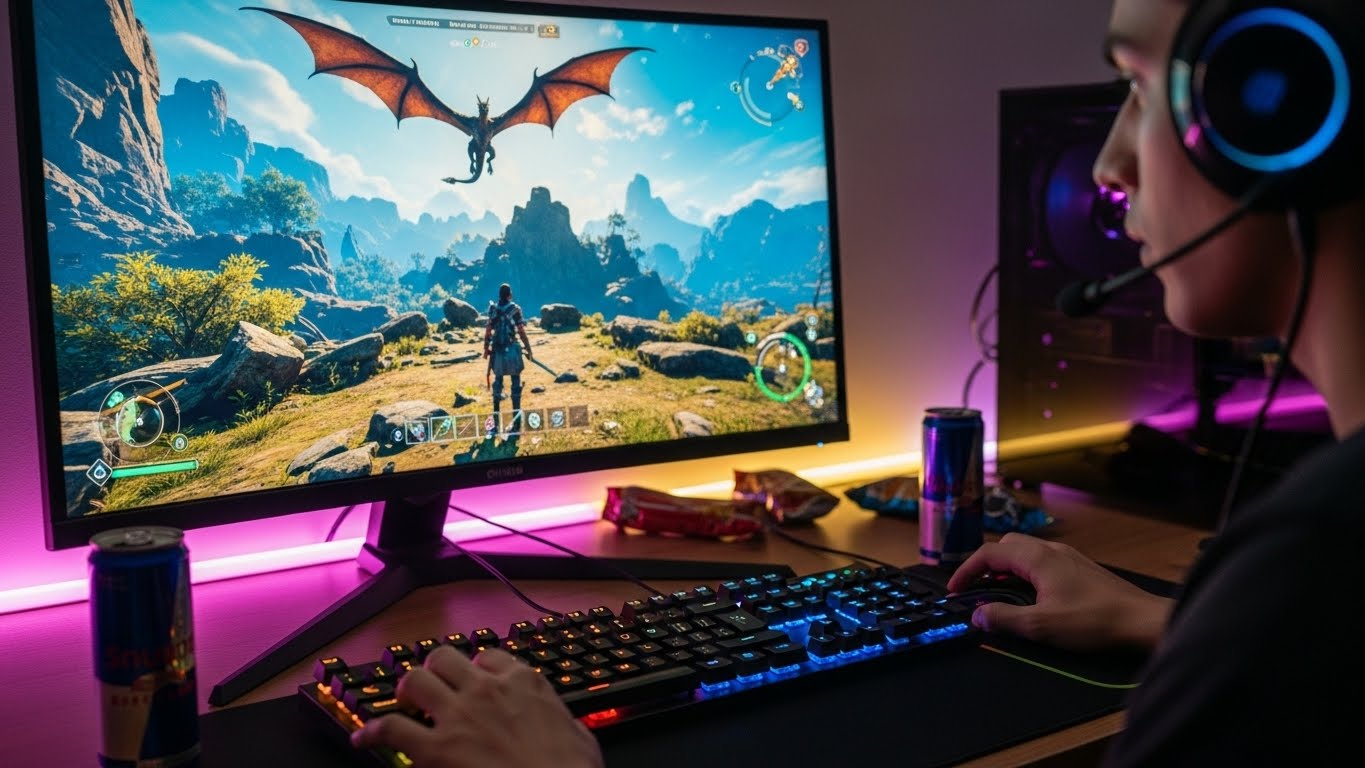
Gaming has evolved from a mere pastime into a multi-billion-dollar industry, captivating millions across the globe. What was once considered a niche hobby is now a mainstream cultural phenomenon that has changed how we entertain ourselves, socialize, and even learn. Whether you’re an avid gamer or someone who has just dipped their toes into the world of digital entertainment, the gaming universe is vast and continually expanding.
In this blog post, we will take a deep dive into the exciting world of gaming, exploring its history, the different genres that have shaped the gaming landscape, the role of technology in gaming’s evolution, and what the future holds for this ever-growing industry.
The Birth of Gaming: A Glimpse into the Past
The origins of gaming can be traced back to the early 1950s when scientists and engineers started developing simple games on computers. One of the earliest known examples is Tennis for Two, a game created by physicist William Higinbotham in 1958. While rudimentary by today’s standards, it laid the groundwork for what would eventually become the gaming industry.
The 1970s and 1980s marked a significant turning point in the world of gaming with the introduction of arcade machines. Titles like Pong, developed by Atari, and Space Invaders became household names, and arcades became social hubs where people could gather to play games together. The success of these early arcade games highlighted the demand for interactive entertainment, and it was clear that video gaming was more than just a passing fad.
The 1990s brought the next major evolution with the advent of home consoles. Companies like Nintendo, Sega, and Sony revolutionized the gaming landscape with the release of iconic consoles such as the Super Nintendo Entertainment System (SNES), Sega Genesis, and PlayStation. These consoles allowed players to enjoy high-quality games in the comfort of their own homes, and video games started to become a central part of mainstream entertainment.
The Rise of Different Gaming Genres
One of the key factors that has contributed to gaming’s lasting popularity is the diversity of genres available. Whether you prefer action-packed shooters, strategic role-playing games, or immersive open-world experiences, there’s something for everyone in the gaming world. Below are some of the most popular gaming genres that have shaped the landscape.
Action and Adventure
Action and adventure games are among the most popular and widely recognized genres in the gaming world. These games often involve a combination of combat, puzzle-solving, and exploration, offering players an exciting and engaging experience. Games like The Legend of Zelda, Uncharted, and Tomb Raider are prime examples of this genre, blending fast-paced action with compelling storytelling and exploration.
The success of action-adventure games has paved the way for a subgenre of “open-world” games, where players are free to explore vast virtual worlds and engage in a variety of activities. Games like Grand Theft Auto V and The Witcher 3: Wild Hunt have set the bar for open-world gaming, offering players expansive environments filled with quests, side missions, and hidden secrets.
Role-Playing Games (RPGs)
Role-playing games (RPGs) have been a cornerstone of the gaming industry for decades. In RPGs, players take on the role of a character in a fictional world, making decisions that impact the story and their character’s development. RPGs often feature complex narratives, character customization, and turn-based or real-time combat mechanics.
The RPG genre has seen tremendous growth with both traditional games like Final Fantasy, The Elder Scrolls, and Dragon Quest and newer, more experimental titles such as Mass Effect and Persona 5. Many RPGs now incorporate elements of open-world exploration and branching storylines, allowing players to truly immerse themselves in their character’s journey.
Strategy Games
For those who prefer a more methodical approach to gaming, strategy games are the perfect choice. Whether in real-time (RTS) or turn-based formats (TBS), strategy games require players to plan their moves carefully, considering various factors such as resources, terrain, and enemy units. Games like StarCraft, Age of Empires, and Civilization are prime examples of strategy games that challenge players’ critical thinking and decision-making skills.
Strategy games often require patience and perseverance, as they can be highly complex and demand long-term planning. The rise of multiplayer strategy games, such as League of Legends and Dota 2, has also introduced a new level of competition and excitement to the genre.
Sports and Racing Games
Sports and racing games have always enjoyed a dedicated fanbase, with franchises like FIFA, NBA 2K, Madden NFL, and Gran Turismo drawing millions of players each year. These games offer a more realistic and immersive take on real-life sports, allowing players to compete in a virtual environment that mirrors the excitement of the real world.
While sports and racing games are often about competition, they also provide an opportunity for players to explore and master new skills. The multiplayer aspect of these games, whether in local co-op or online play, further enhances their appeal, allowing friends and strangers alike to come together and engage in thrilling matches.
Puzzle and Casual Games
Not all games need to be fast-paced or action-packed to be enjoyable. Puzzle and casual games have a special place in the hearts of many gamers, offering relaxing and intellectually stimulating experiences. Titles like Tetris, Candy Crush Saga, and Angry Birds have proven that simple, easy-to-learn games can still captivate audiences and become cultural phenomena.
Puzzle games often challenge players’ problem-solving abilities, while casual games provide a more laid-back experience that can be picked up and played for a few minutes at a time. The accessibility of these games has made them popular among players of all ages, helping to expand the gaming community even further.
The Role of Technology in Shaping Gaming
Gaming has always been at the forefront of technological innovation, with each new generation of consoles and computers pushing the boundaries of what’s possible in virtual worlds. From improved graphics and processing power to virtual reality (VR) and artificial intelligence (AI), technology plays a crucial role in shaping the gaming experience.
Graphics and Immersion
One of the most obvious ways technology has transformed gaming is through improvements in graphics. The jump from 8-bit to 16-bit to 3D graphics marked a significant evolution in how games were presented, making them more visually immersive and lifelike. Today, modern games feature photorealistic graphics that rival Hollywood films, with intricate details, realistic lighting, and lifelike character animations.
With the rise of ray tracing, advanced particle effects, and enhanced textures, today’s games look more stunning than ever before. This visual fidelity, combined with improvements in audio and voice acting, creates a more immersive experience that pulls players into the game world like never before.
Virtual Reality (VR) and Augmented Reality (AR)
Virtual reality (VR) and augmented reality (AR) have brought new dimensions to gaming, making it possible for players to physically interact with virtual worlds. VR headsets, such as the Oculus Rift and PlayStation VR, provide an immersive experience where players can look around and move in a 360-degree space, while AR games like Pokémon Go blend the digital world with the real world using smartphones.
While VR and AR technologies are still in their early stages, they have the potential to completely revolutionize gaming by offering a level of immersion and interactivity that traditional gaming platforms cannot match.
Cloud Gaming and Streaming Services
Cloud gaming is another exciting development that has opened up new possibilities for gamers. Services like Google Stadia, Xbox Cloud Gaming (formerly Project xCloud), and NVIDIA GeForce Now allow players to stream games directly to their devices without the need for expensive hardware. This has democratized gaming, making high-quality gaming experiences accessible to anyone with a stable internet connection.
The rise of cloud gaming could ultimately change how we think about gaming hardware, as players may no longer need powerful consoles or gaming PCs to enjoy the latest titles. Instead, games will be played directly from the cloud, reducing the need for local storage and hardware upgrades.
The Future of Gaming: What’s Next?
The future of gaming is incredibly exciting, with new technologies and trends constantly emerging. From AI-driven narratives to the potential of fully immersive virtual worlds, the next few decades are sure to bring about groundbreaking innovations in gaming.
As we look forward to the future, some of the key developments to keep an eye on include:
- Artificial Intelligence: AI is expected to play a greater role in shaping gaming, allowing for more dynamic and responsive game worlds. NPCs (non-playable characters) could become more lifelike, with advanced decision-making abilities and adaptive behaviors.
- Next-Gen Consoles: As technology continues to evolve, we can expect even more powerful consoles that offer faster load times, better graphics, and more expansive game worlds.
- Esports and Competitive Gaming: The rise of esports has transformed gaming into a legitimate competitive sport, with tournaments offering millions of dollars in prize money. This trend will only continue to grow, with new games and platforms emerging to cater to professional and casual esports players alike.
- Metaverse: The concept of the metaverse, a virtual universe where users can interact with each other and digital environments in real-time, is becoming a hot topic. Gaming will likely play a key role in the metaverse, with virtual worlds offering endless opportunities for social interaction, entertainment, and commerce.
Conclusion
Gaming has come a long way since its humble beginnings in the 1950s. What started as a niche hobby has blossomed into a global industry that touches the lives of millions of people. Today, gaming is more than just entertainment; it’s a way to connect with others, experience amazing worlds, and challenge ourselves in new and exciting ways.