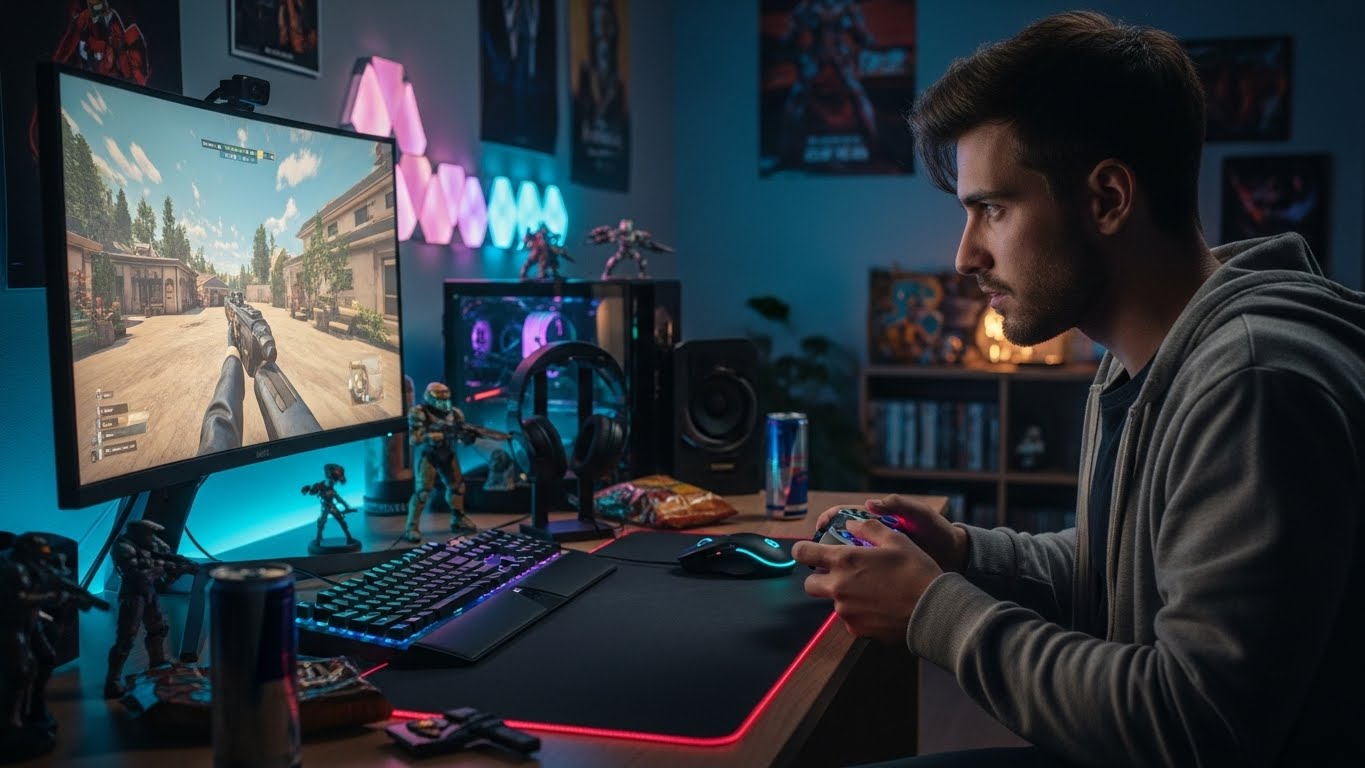
Gaming has come a long way since the days of simple pixelated screens and beeping soundtracks. What began as a niche hobby for tech enthusiasts has grown into a global cultural phenomenon, captivating millions of players worldwide and influencing entertainment, technology, and social interaction. Today, gaming is not just a pastime—it is a multi-billion-dollar industry, a platform for creativity, and a medium that bridges cultures and generations. This blog explores the evolution of gaming, the technologies that drive it, the cultural impact it has, and what the future holds for players and developers alike.
The Origins of Gaming: A Digital Playground
The story of gaming begins in the early 1970s, when simple arcade games like Pong captured the imagination of players. These early games were straightforward, often limited to two-dimensional graphics and basic mechanics, but they sparked the imagination of a generation. The introduction of home consoles in the late 1970s and early 1980s brought video games into living rooms around the world, making them accessible to a broader audience. Classic titles such as Space Invaders, Pac-Man, and Super Mario Bros laid the foundation for modern gaming, introducing players to compelling narratives, challenges, and competitive gameplay.
During this period, gaming was largely a solitary or local multiplayer experience. Players would gather around a console or arcade machine, competing for high scores and enjoying shared experiences. Despite the simplicity of early games, they fostered a sense of community and excitement that would shape gaming culture for decades to come.
The Rise of PC Gaming: Complexity and Creativity
While consoles dominated the living room, personal computers opened up new avenues for gaming innovation. PC gaming allowed developers to create more complex and detailed games, thanks to the flexibility and power of computer hardware. Titles like Doom, Warcraft, and The Sims demonstrated the potential of PCs to deliver immersive experiences that went beyond the limitations of arcade machines.
PC gaming also became a platform for creativity. Players could modify games, create custom content, and even develop entirely new game modes. This culture of modding not only extended the lifespan of games but also inspired many aspiring developers to pursue careers in the industry. The combination of flexibility, creativity, and technical innovation cemented PC gaming as a cornerstone of the gaming ecosystem.
Online Gaming: Connecting Players Across the Globe
The advent of the internet revolutionized gaming by connecting players from around the world. Online multiplayer games like World of Warcraft, Counter-Strike, and League of Legends created virtual communities where players could collaborate, compete, and form lasting friendships. The social aspect of gaming became just as important as the gameplay itself, transforming games into platforms for communication and shared experiences.
Esports emerged as a professional arena for competitive gaming, attracting millions of viewers and offering players the opportunity to earn careers through their skills. Tournaments, live streams, and sponsorships elevated gaming to a level previously reserved for traditional sports, creating a vibrant global ecosystem. Online gaming also introduced new challenges, such as cybersecurity, cheating, and digital harassment, highlighting the need for responsible community management and technological safeguards.
Mobile Gaming: Gaming in Your Pocket
The rise of smartphones brought gaming to an entirely new audience. Mobile games like Angry Birds, Candy Crush, and PUBG Mobile allowed players to enjoy gaming anytime and anywhere, democratizing access and making it a part of daily life. Mobile gaming’s simplicity, accessibility, and social integration made it appealing to casual players who might never have considered traditional consoles or PCs.
Mobile gaming also drove innovation in game design. Short, engaging gameplay loops, freemium models, and social features became central to the mobile gaming experience. The success of mobile platforms demonstrated that gaming could be both entertaining and profitable, encouraging developers to explore creative ways to engage diverse audiences.
Virtual Reality and Augmented Reality: Immersive Experiences
Virtual reality (VR) and augmented reality (AR) are redefining how players interact with games. VR immerses players in fully digital environments, allowing them to explore worlds in a way that feels real and tangible. Games like Beat Saber and Half-Life: Alyx showcase the potential of VR to deliver physically engaging and emotionally impactful experiences.
AR overlays digital elements onto the real world, creating interactive experiences that blend reality with imagination. Games like Pokémon Go revolutionized mobile gaming by encouraging players to explore their surroundings while engaging with virtual content. Together, VR and AR push the boundaries of immersion, offering experiences that were previously unimaginable and setting the stage for the next era of interactive entertainment.
The Role of Artificial Intelligence in Gaming
Artificial intelligence is playing an increasingly important role in gaming, both behind the scenes and in the gameplay itself. AI-driven non-player characters (NPCs) can respond intelligently to player actions, creating more dynamic and challenging experiences. Procedural generation, powered by AI, allows for vast and unique game worlds without requiring manual design for every detail.
AI also enables personalization, tailoring gameplay experiences to individual players based on their preferences and behavior. As AI continues to advance, we can expect games to become even more adaptive, responsive, and immersive, providing experiences that feel uniquely tailored to each player.
Cultural Impact of Gaming
Gaming has become a major cultural force, influencing music, film, fashion, and social trends. Iconic characters like Mario, Lara Croft, and Master Chief have become cultural icons recognized worldwide. Gaming communities and fan cultures create shared experiences, from cosplay conventions to fan art, storytelling, and streaming platforms.
Streaming and content creation have transformed the way people consume games. Platforms like Twitch and YouTube allow players to share gameplay, tutorials, and live commentary, creating new forms of entertainment and engagement. The social aspect of gaming fosters creativity, collaboration, and a sense of belonging, making it more than just a hobby—it is a lifestyle.
Challenges in Modern Gaming
Despite its growth and popularity, gaming faces several challenges. One of the biggest is inclusivity and accessibility. Games must be designed to be enjoyable for a diverse audience, including players with disabilities or different cultural backgrounds. Additionally, the pressure of microtransactions and pay-to-win models can impact player experiences and raise ethical concerns.
Cybersecurity and digital safety are also ongoing issues, especially in online multiplayer environments. Protecting player data, preventing cheating, and maintaining safe communities are essential for sustaining trust and enjoyment. Developers and industry leaders must continuously innovate while addressing these challenges responsibly.
The Future of Gaming: What Lies Ahead
The future of gaming is incredibly exciting. Cloud gaming promises to eliminate hardware limitations, allowing high-quality experiences on virtually any device. AI-driven storytelling could create narratives that evolve uniquely for each player, while advancements in VR and AR will offer even more immersive and realistic experiences.
Gaming will continue to intersect with other industries, including education, healthcare, and professional training. Serious games are already being used for skill development, mental health therapy, and cognitive enhancement. As technology and creativity advance, the line between gaming and real-world applications will increasingly blur, making games a tool for both entertainment and personal growth.
Conclusion: Gaming as a Universal Experience
Gaming is no longer just about entertainment—it is a reflection of human creativity, technological progress, and cultural evolution. From the simple joys of early arcade games to the immersive worlds of modern VR experiences, gaming has continually pushed boundaries and redefined what is possible. It connects people, inspires creativity, and offers endless opportunities for exploration and self-expression.
As the industry grows, the possibilities for innovation are limitless. By embracing new technologies, fostering inclusive communities, and prioritizing ethical development, gaming can continue to evolve in ways that captivate, challenge, and inspire players around the world. Whether you are a casual mobile player, a competitive esports athlete, or a developer creating the next groundbreaking experience, gaming offers a universe waiting to be explored—a universe where imagination and technology meet to shape the future.