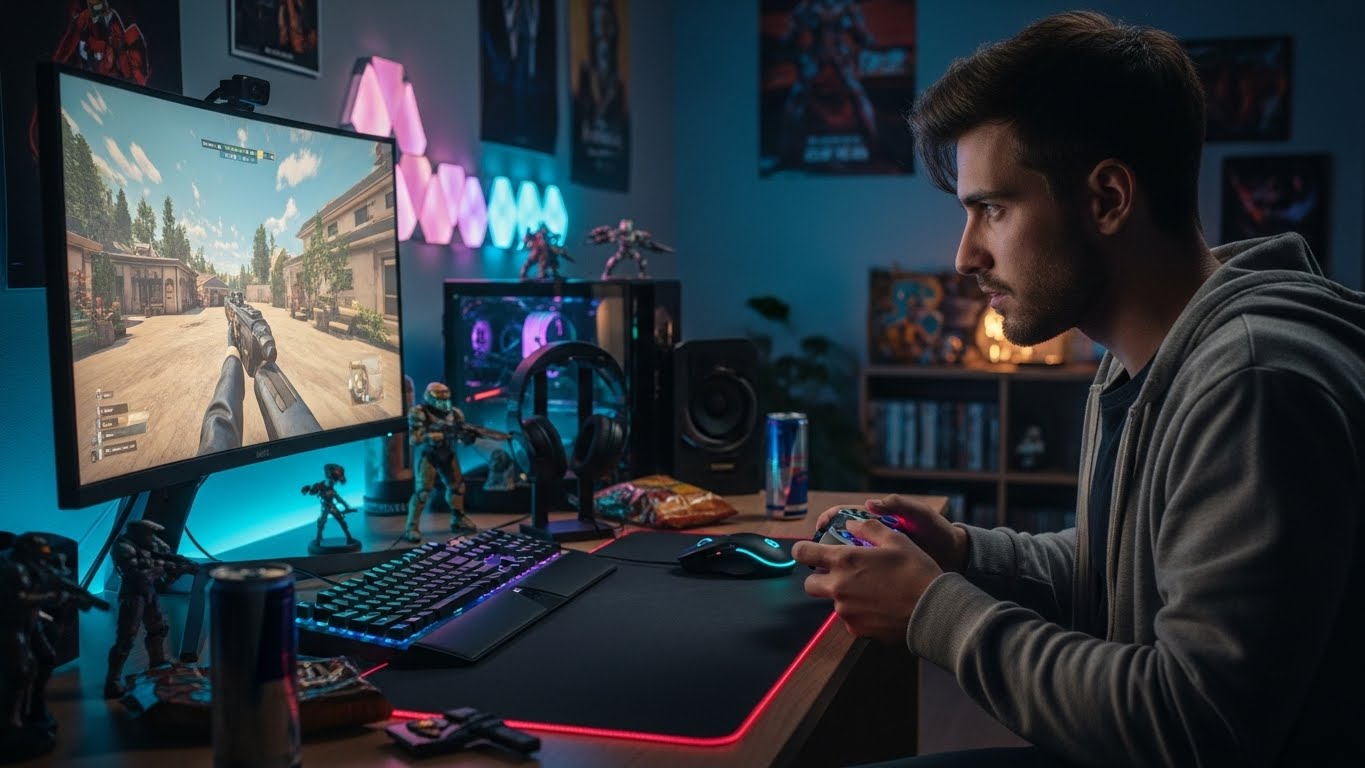
Gaming has come a long way from the days of arcade machines, 8-bit graphics, and rudimentary gameplay. It has transformed into a multi-billion-dollar industry, offering a broad spectrum of experiences that cater to every type of player. Whether you’re a casual gamer, a competitive esports enthusiast, or a fan of immersive story-driven adventures, gaming today offers something for everyone. This blog explores the evolution of gaming, the culture surrounding it, and how it has become an integral part of our daily lives.
The Beginnings of Gaming: From Arcades to Home Consoles
The early days of gaming were defined by simple mechanics and pixelated graphics. In the late 1970s and early 1980s, arcades became the central hub for gamers, offering titles like Space Invaders and Pong, which were revolutionary for their time. The appeal was straightforward—players inserted coins to challenge their skills, and the competition was fierce.
However, with the advent of home consoles in the 1980s, gaming became more accessible. Systems like the Nintendo Entertainment System (NES) and Sega Genesis brought gaming into living rooms across the world. These consoles introduced more complex games with improved graphics, sound, and narratives. Iconic games such as Super Mario Bros., The Legend of Zelda, and Sonic the Hedgehog became household names, giving rise to a new era of gaming.
The Golden Age of 3D: The PlayStation Revolution
The mid-1990s marked a significant turning point in the world of gaming. Sony’s PlayStation, released in 1994, changed the landscape by introducing 3D graphics and CD-ROM technology. The PlayStation was a game-changer, offering better graphics, faster load times, and a more immersive experience than anything seen before. Titles like Final Fantasy VII, Gran Turismo, and Metal Gear Solid pushed the boundaries of storytelling and gameplay.
This era also saw the rise of the PC gaming scene, where titles like Half-Life, Quake, and StarCraft became the cornerstone of competitive gaming. While consoles were still the dominant force, the personal computer began to take on a more significant role in gaming, especially for those looking for cutting-edge graphics and in-depth strategy games.
Online Gaming: The Rise of Multiplayer Experiences
As the internet became more widespread in the late 1990s and early 2000s, online gaming started to gain popularity. The ability to connect with players from all over the world opened up new possibilities for competition, cooperation, and social interaction.
MMOs (Massively Multiplayer Online games) like World of Warcraft became global phenomena, with millions of players diving into virtual worlds. These games offered vast, persistent worlds where players could engage in quests, trade items, and battle monsters or each other. MMORPGs allowed players to form communities, guilds, and friendships that transcended borders, marking the beginning of gaming as a social experience.
On the other hand, first-person shooters (FPS) like Counter-Strike and Halo popularized the concept of team-based multiplayer action. The rise of online multiplayer games led to the creation of esports, where professional gamers competed in tournaments with massive prize pools and worldwide audiences. Esports has since grown into a global industry, attracting sponsorships, media coverage, and even college scholarships.
Mobile Gaming: Gaming on the Go
The introduction of smartphones revolutionized gaming once again. Games like Angry Birds, Candy Crush, and Clash of Clans made gaming more accessible than ever. Mobile gaming allowed players to enjoy their favorite titles on the go, whether they were commuting to work, waiting in line, or relaxing at home.
Mobile gaming has become a multi-billion-dollar industry in its own right, offering a wide range of genres from puzzle games to battle royale experiences. In fact, mobile gaming has introduced new business models, such as freemium games, which are free to download but offer in-app purchases to enhance the experience.
The success of mobile games also led to the development of more advanced mobile hardware, with companies like Apple and Google constantly improving the power and graphics capabilities of smartphones. Games like PUBG Mobile and Fortnite Mobile prove that mobile platforms can deliver high-quality experiences similar to those found on consoles and PCs.
The Emergence of Virtual and Augmented Reality
One of the most exciting innovations in recent years has been the advent of virtual reality (VR) and augmented reality (AR). VR technology creates immersive, 360-degree worlds where players can physically interact with their environment. Popular VR systems like the Oculus Rift and PlayStation VR have given players the ability to step into entirely new realities, playing games like Beat Saber, Half-Life: Alyx, and Resident Evil 7 in ways that were once unimaginable.
AR, on the other hand, overlays digital content onto the real world. Games like Pokémon GO took advantage of this technology, encouraging players to go outside and explore their surroundings while capturing virtual creatures. AR has the potential to revolutionize not only gaming but also fields like education, training, and healthcare.
While both VR and AR are still in their early stages, they represent the future of gaming, offering endless possibilities for immersion and interaction.
The Evolution of Game Design and Narrative
As gaming technology has advanced, so too has the quality of game design and storytelling. In the past, most games were simple and focused primarily on gameplay. However, as the industry grew, developers began to focus on creating more engaging narratives that rival those found in books and movies.
Games like The Last of Us, Red Dead Redemption 2, and God of War have demonstrated the potential for video games to tell emotionally powerful stories. These games feature intricate plots, well-developed characters, and stunning visuals that make players feel like they are part of the story. In fact, many video games today feature cinematics that are on par with Hollywood films, blurring the lines between traditional media and interactive entertainment.
Game developers have also pushed the boundaries of gameplay mechanics, offering experiences that are unique and innovative. Open-world games like The Witcher 3 and Breath of the Wild allow players to explore vast, detailed environments, while narrative-driven games like Heavy Rain and Detroit: Become Human offer interactive stories where player choices impact the outcome.
The Social Aspect of Gaming
In recent years, gaming has become more social than ever before. Multiplayer games allow friends to team up and play together, creating shared experiences that can be enjoyed regardless of physical distance. Platforms like Twitch and YouTube Gaming have created spaces for gamers to share their experiences with the world. Streamers and content creators have turned gaming into a career, attracting millions of viewers who tune in to watch live streams or recorded content.
Furthermore, games like Fortnite and Among Us have demonstrated how gaming can create a sense of community. Whether through in-game events, online chat, or collaborative gameplay, gaming has become a way for people to connect, share experiences, and build friendships.
The Future of Gaming: What’s Next?
As we look to the future of gaming, it’s clear that the possibilities are endless. Cloud gaming is expected to play a significant role, allowing players to stream games on any device without needing high-end hardware. Services like Google Stadia and Microsoft xCloud are already paving the way for this new era of gaming, where the barriers to entry are lower than ever before.
Artificial intelligence (AI) is also poised to revolutionize the gaming industry, from creating more intelligent NPCs (non-playable characters) to enabling procedural generation of game worlds. The integration of AI can lead to more dynamic and responsive gaming experiences that adapt to a player’s style and choices.
Additionally, as gaming technology continues to advance, we can expect even more immersive experiences with VR and AR. The potential for creating lifelike worlds and interactive narratives is only going to grow, making gaming an even more integral part of our lives.
Conclusion
Gaming has evolved from a niche hobby to a global phenomenon that shapes the way we socialize, compete, and experience stories. With advancements in technology, gaming will only continue to grow, offering even more exciting and immersive experiences. Whether you’re a longtime gamer or someone just starting out, the world of gaming is vast and full of possibilities, and there has never been a better time to dive in. As the industry continues to innovate, one thing is for certain—gaming is here to stay.