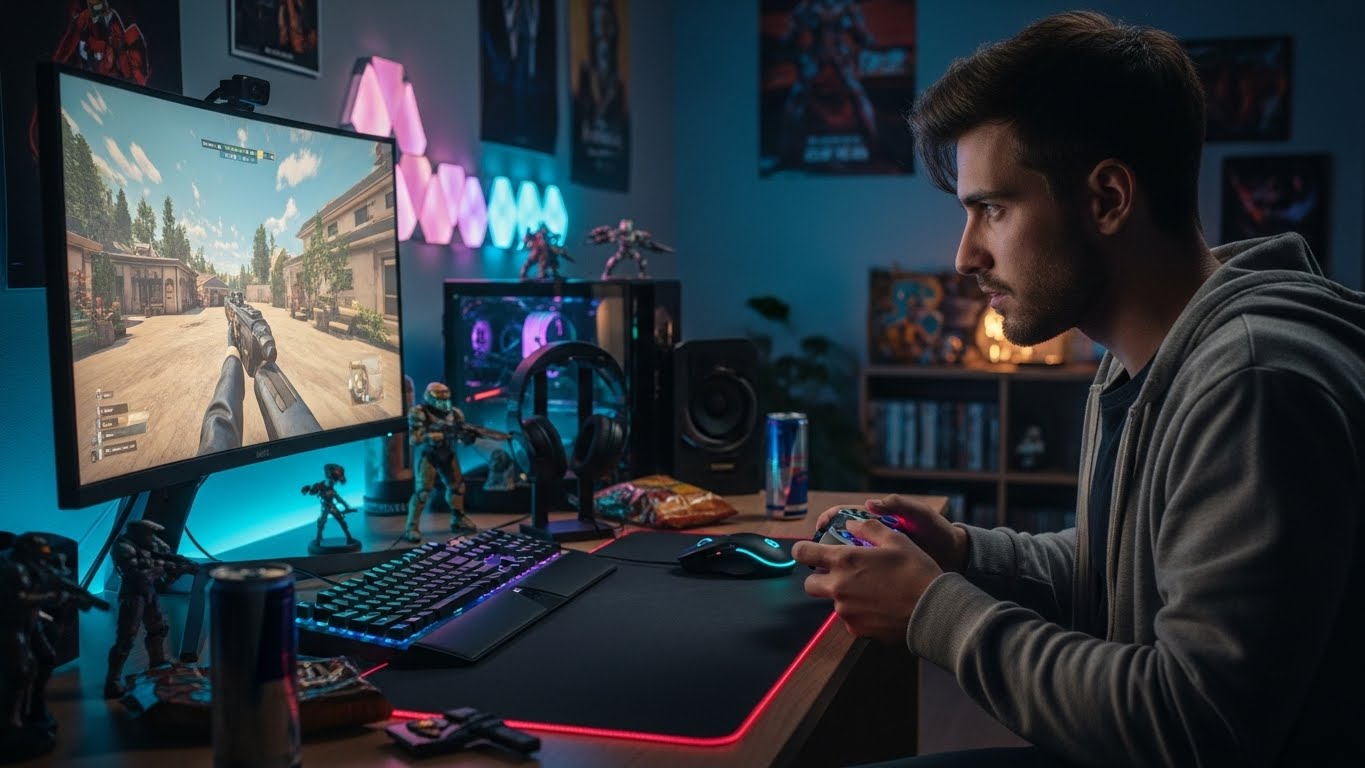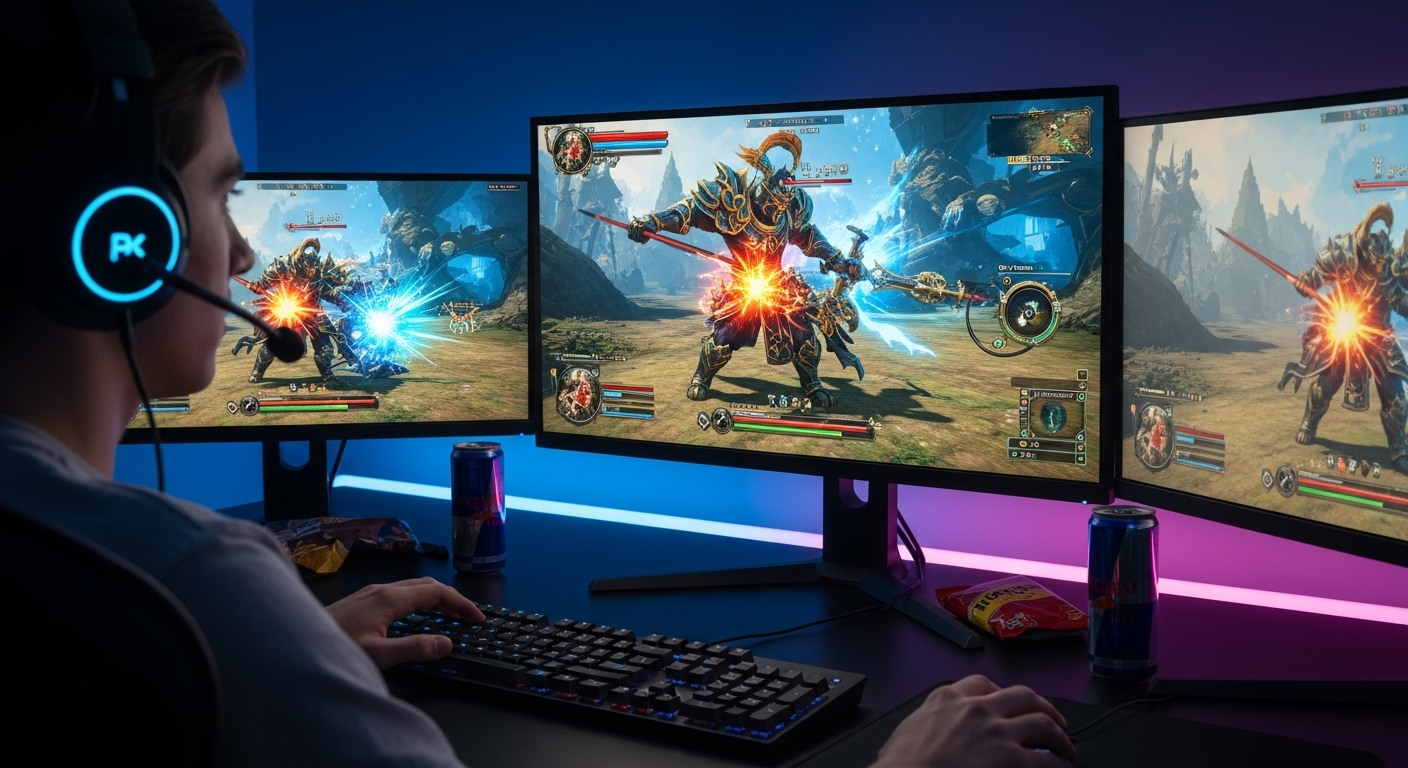
Gaming is no longer just a pastime; it has become a global cultural force that shapes how we interact with technology, storytelling, and even each other. From humble beginnings as a niche hobby to the immersive, expansive experiences we enjoy today, the evolution of gaming has been nothing short of revolutionary. In this blog post, we dive into the world of gaming, exploring its history, current trends, and what the future might hold.
The Dawn of Gaming: A New Era of Entertainment
The story of gaming begins in the 1950s, where early pioneers experimented with computer graphics and rudimentary interactive games. The first true gaming experience that reached the public came in the early 1970s with Pong, a simple yet addictive arcade game that captivated players with its straightforward yet engaging gameplay. As arcade gaming exploded in popularity, the world began to realize the potential of video games as both a form of entertainment and a cultural phenomenon.
In 1977, the Atari 2600 was released, marking a significant moment in gaming history. It was the first widely successful home console, allowing families to enjoy games like Space Invaders and Asteroids in the comfort of their living rooms. This home console revolution paved the way for gaming to become a mainstream activity, no longer confined to arcades but accessible to anyone with a television and a joystick.
The 80s and 90s: Defining a Generation
The 1980s and 1990s were transformative decades for gaming, with major technological advancements and the birth of some of the most iconic game franchises of all time. The introduction of 8-bit and 16-bit consoles such as the Nintendo Entertainment System (NES), Sega Genesis, and Super Nintendo marked the beginning of the golden era of gaming. These systems brought to life beloved characters like Mario, Sonic, and Link, who became symbols of the gaming industry.
During this period, gaming went from being a simple form of entertainment to an artistic medium capable of telling complex stories. Games like The Legend of Zelda and Final Fantasy showed that video games could weave intricate narratives, deep character development, and vast, open worlds. The rise of 3D graphics in the mid-90s, seen in games like Super Mario 64 and Final Fantasy VII, pushed the boundaries of what was possible, opening up new possibilities for exploration and gameplay.
The Online Revolution: Gaming Goes Global
As the internet became more widespread in the late 1990s and early 2000s, online gaming quickly emerged as a major force. With games like Quake and Warcraft, players could connect with others across the globe in real time. This new form of multiplayer gaming revolutionized the experience, allowing people to compete, cooperate, and form communities from all corners of the world.
The 2000s saw the rise of massively multiplayer online role-playing games (MMORPGs) like World of Warcraft, which drew millions of players into virtual worlds that they could explore together. These games created online communities where players could form guilds, take on epic quests, and engage in global events. Online multiplayer gaming transformed gaming from a solo activity to a collective experience, laying the foundation for esports and streaming cultures that would grow in the years to come.
Modern Gaming: Graphics, Storytelling, and Immersion
Fast forward to today, and gaming has reached new heights of realism and complexity. With powerful consoles like the PlayStation 5, Xbox Series X, and high-end gaming PCs, the graphics, sound, and physics of modern games are mind-blowing. Titles like Red Dead Redemption 2 and The Last of Us Part II offer players lifelike environments, emotionally charged storylines, and characters that feel as real as any in film or literature.
What makes modern gaming so captivating is the level of immersion it offers. Games like The Witcher 3 and Elden Ring present vast, open worlds filled with rich lore, interactive narratives, and choices that genuinely affect the outcome of the story. The storytelling in modern games has matured to the point where it can rival traditional mediums like movies and books.
Additionally, advancements in artificial intelligence have made NPCs (non-playable characters) smarter and more reactive. Players no longer feel like they’re in a static, pre-programmed world; instead, they interact with environments that feel alive, where the consequences of their actions are tangible.
The Rise of Esports and Streaming Culture
Another major shift in the gaming landscape has been the growth of esports and streaming culture. What was once a niche interest has now become a global industry worth billions. Competitive gaming, or esports, has turned professional players into celebrities, with tournaments for games like League of Legends, Dota 2, and Counter-Strike: Global Offensive drawing millions of viewers.
Streaming platforms like Twitch and YouTube Gaming have played a significant role in this shift, allowing players to broadcast their gameplay to massive audiences. These platforms have created a new form of entertainment where people can watch others play, learn strategies, or simply enjoy the personalities of their favorite streamers.
Esports has become so popular that it’s now featured in major global events, and in some countries, it’s even gaining recognition as an official sport. The growth of esports has not only changed how people consume gaming content but also reshaped how games are developed, with many modern games being designed specifically with competitive play in mind.
Virtual Reality and the Future of Gaming
Looking ahead, the future of gaming appears brighter than ever. The rise of virtual reality (VR) and augmented reality (AR) is poised to completely transform the way we experience games. VR headsets like the Oculus Quest and HTC Vive allow players to step directly into virtual worlds, offering a level of immersion previously only seen in science fiction.
As VR technology continues to improve, it’s expected that gaming will become even more interactive and lifelike. Imagine playing a game where you physically move through the environment, interact with objects, and feel like you’re truly living within the game. VR could make these experiences a reality, offering players the ultimate sense of immersion.
AR games like Pokémon GO have already shown the potential for blending the real world with the virtual one, and as AR technology advances, it’s likely that we’ll see even more interactive experiences that bridge the gap between reality and fantasy.
The Endless Horizons of Gaming
Gaming has come a long way from its simple beginnings, and as technology continues to evolve, the possibilities for interactive entertainment are limitless. Whether it’s through breathtaking graphics, intricate narratives, or new forms of immersion like VR and AR, the future of gaming promises to be as exciting and unpredictable as the worlds it allows us to explore.
For players, gaming has become more than just a way to pass the time; it’s an art form, a social activity, and a powerful form of storytelling. As the industry continues to innovate, we can only imagine the experiences that lie ahead, as gaming continues to push the boundaries of what’s possible in entertainment.